Everything You Need to Know About Packing a Storage Space

Everything You Need to Know About Packing a Storage Space

Whether you’re downsizing to a one-bedroom apartment and need to store some extra furniture, or you’re moving from Philadelphia to Atlanta and need somewhere to store your belongings during the transition, renting a storage unit can be a complicated process. Let’s break down the details on the types of storage units, recommended sizes and how to pack your storage unit. how-to-pack-storage-unit_IG Paste this Image on Your Site! Simply copy and paste the code below and you can share this infographic on your site: [fdembed]  

Which Storage Option Is Right for You?

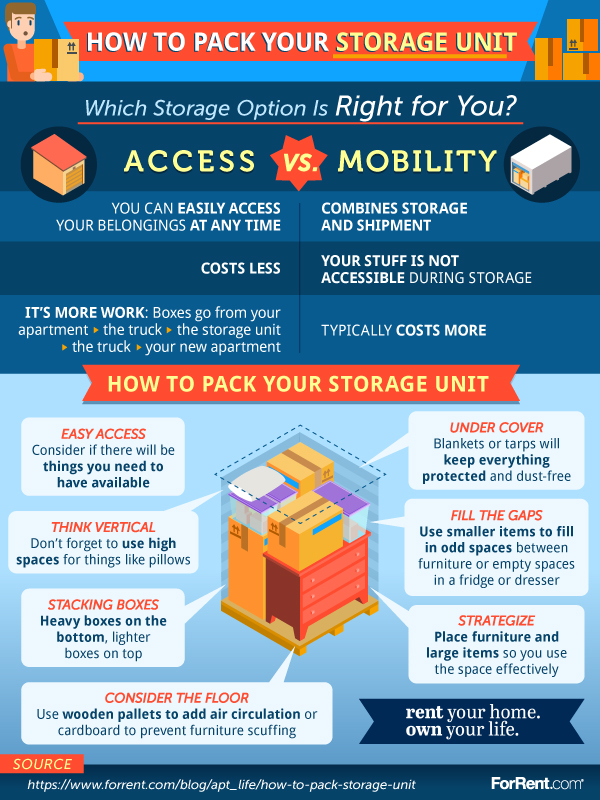
The two main categories are self-storage units and movable storage containers. In deciding between the two, the main factor is access versus mobility. With a traditional self-storage unit, you can easily access your belongings at any time. These types of storage units will typically cost less, but there’s more work involved because the boxes will need to go from your current apartment to the truck, then to the storage unit, then back to the truck before finally making their way into your new apartment. By using a moveable container storage unit, you are combining storage and shipment. Although this gives you greater mobility, you will not have access to your stuff while it’s in storage, and the storage rates typically cost more than a traditional storage unit.  

Choosing Your Storage Unit

There are some additional factors to consider when choosing your storage unit. No matter how long you are storing your belongings for, the security of the storage unit is crucial because you want to be sure that your belongings will not get stolen or vandalized. Additionally, a climate-controlled storage location is important because even small amounts of dampness can ruin your things with mold and mildew. Recommended sizing for your storage unit is as follows:
    • 8’ x 12’: 2 to 3 rooms
    • 10’ x 10’: 3 rooms
    • 8’ x 16’: 3 to 4 rooms
    • 10’ x 15’: 4 rooms
    • 10’ x 20’: 5 rooms
    • 10’ x 25’: 6 rooms
 

Storage Preparations

Before you begin to pack your storage unit, you need to do some prep work. First of all, make sure your storage unit is reserved in advance. Next, secure insurance for your things while they’re in storage. If you have renter’s insurance, your policy may cover belongings that are off-site, or insurance may be available when you rent the storage unit. Next, address your belongings by making sure everything you’re packing is clean and dry. Be sure to label your boxes, and don’t forget to mark what’s fragile. For a packing hack, seal your cardboard boxes using packing tape that doubles as a label because it has the room name printed on the tape.   Another important part of the prep work is to disassemble large objects like bed frames or tables. A pro tip is to put all of the assembly screws in a baggie and attach it to the piece of furniture. Your future self will thank you for not losing that set of assembly screws.  

How to Pack Your Storage Unit

Before you even put things in your storage unit, start with a strategy. You’ll want to place furniture and large items so you use the space effectively. Next, consider if there will be things you need to have available in your unit. These objects should be placed so you can easily access them after the unit is packed. When packing the unit, consider the floor material and use wooden pallets to add air circulation or cardboard to prevent furniture scuffing. When stacking boxes, place heavy boxes on the bottom and lighter boxes on top. Remember to think vertical. High spaces are a great location for things like pillows. Use smaller items to fill in odd spaces between furniture or inside empty spaces like a dresser. Lastly, use blankets or tarps as a covering to keep everything protected and dust-free.   For more tips for a better apartment life, follow along at the ForRent.com Apartment Living Blog.    
Sources: https://www.publicstorage.com https://www.pods.com http://www.millersupplyinc.com http://www.bankrate.com/finance/insurance/insurance-stuff-placed-in-storage.aspx#/h
Related Topics (1)

Recommended Posts

How to Decorate Walls without Painting

How to Decorate Walls without Painting

If you’re a renter you know the difficulties behind adding a little personality and color to your apartment. Restrictions like ‘no painting’ doesn’t allow for very much creative freedom. And given that your apartment is your space, your personal retreat from the rest of the world; it’s hard to be surrounded by bare white walls. […]

read more
How to Replace a Faceplate

How to Replace a Faceplate

Small changes can make a big difference when you are trying to breathe new life into your space. Not all DIY projects are expensive and cumbersome. In fact, some apartment improvement projects can be completed in under 5 minutes – and yes, you’ll still have money to go out with this weekend. How many times […]

read more
Things to Consider When Finding a Roommate

Things to Consider When Finding a Roommate

Things to Consider When Finding a Roommate Finding the perfect roommate can seem like an impossible mission. The key is communication to determine if your next roommate is right for you. Follow the chart below to help you decide. 1) Were you already acquainted with this person?  Yes, we’ve met. Go to #2 No, he/she […]

read more
Plants Your Pets Should Avoid

Plants Your Pets Should Avoid

Spring is here and that means spring cleaning is in full effect.  Decorating your apartment with plants and flowers is a great way to liven up your space.  Bringing nature in your home and watching everything bloom is a great reminder of the warmer months that are on the way. If you have pets, however, […]

read more
Water & Energy Saving Tips

Water & Energy Saving Tips

Going green is instrumental in keeping our planet alive. So do your part to make sure you aren’t overusing our resources and depleting our reserve. Here are some water and energy saving tips for your home. Compact fluorescent light bulbs are an efficient lighting source for your home. They conserve energy by using less wattage […]

read more

Pick a Category or Topic

Categories

Topics