
The Three Questions That Settle Every Used-or-New Decision
 After scrolling endlessly on an online marketplace or scavenging through thrift store aisles, you think you’ve found a great deal! But is it truly a good deal, or something you should pass on? Run your finds through these three questions, and you’ll get the right answer every time.
1. Does It Touch Your Body for Hours at a Time?
Humans shed skin cells at a rapid rate. Where do these skin cells go? Mattresses, pillows, upholstered seating, and towels. Anything absorbent that spends hours on skin should be new. It’s hygiene and it’s a pest risk since no amount of steaming, washing, spraying, or karmic cleansing fully resolves either one.2. Does It Have a Motor, a Seal, or a Heating Element?
Vacuums, blenders, coffee makers, and space heaters fail invisibly. The failure is either expensive or on fire. Buy used only if you can plug it in and run it in front of the seller before any money changes hands.3. Will It Survive the Next Move?
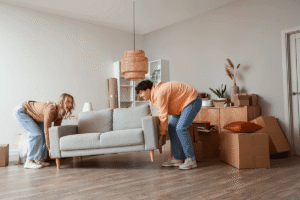
Something can look perfect for your boho maximalist cottagecore apartment. However, thinking about its survivability is crucial to avoid heartbreak later. Trust: when you’re moving again, and you’ve forgotten where you’ve packed your heaviest items, you’re going to want a piece that can survive more than vibes, prayers, and a suspiciously confident mover. Solid wood travels. Particleboard does not survive being taken apart twice. This logic also cuts the other way: a well-built, design-forward piece holds its value on the secondhand market.What Furniture to Buy Secondhand Without Thinking Twice

Solid Wood Tables, Dressers, and Bookcases
These are the single best value in the entire secondhand market. A 1970s oak dresser was built better than many modern ones, and unlike the new one, it can be sanded and refinished into whatever your taste is doing this year. This makes a wooden piece of furniture a great candidate for a simple DIY project. Still, buying secondhand always merits a good inspection. Here’s what to check:- drawers that slide without a shoulder into it
- joints that don’t wobble when you rock the piece
- legs that haven’t been rescued with a visible bead of wood glue.
Lamps, Mirrors, and Anything for the Walls
Buying anything that hangs on a wall used has a near-zero risk and the fastest way to make a rental look like a decision instead of an accident. Mirrors do double duty in a small place, and they’re one of the cheapest tricks in decorating a small apartment. For lamps, run the cord through your fingers and look for cracked or brittle insulation, then check that the socket isn’t corroded. Plug it before taking it home.Tools, Ladders, and the Junk Drawer Starter Kit
A hammer is a hammer. Garage and estate sales will kit you out for a fraction of hardware-store prices, and tools are one of the must-haves for a new apartment people always forget to budget for. Skip anything that’s wobbly, has a frayed cord, or a missing blade guard.Dishes, Glassware, and Cast Iron
If it goes into the dishwasher, it’s likely risk-free. Cast iron is arguably better used since it has decades of seasoning you didn’t have to build. Steel wool, oil, an hour in the oven, and you’re the proud owner of a fully functional cast iron product. One caveat: very old ceramics and glazed pottery can carry lead. Enjoy the vintage floral plates as decor, but eat off something made this century.What Not to Buy Used, No Matter How Good the Deal Looks

Mattresses: The One Rule With No Exceptions
Used mattresses are usually a bad idea. Here are only a few reasons:- Mattress support degrades in ways you cannot see, feel in a ten-second sit test, or fix.
- The strange mattress stains you can’t explain should likely stay unexplained.
- Bed bugs live in mattress seams.
- Several states restrict reselling used mattresses without sanitizing and re-tagging them. That online marketplace listing you saved for later may not even be legal where you live.
Bedding, Pillows, and Towels
Same logic, much cheaper fix. Good bedding lasts years, so it’s a low-regret place to spend full price.Upholstered Sofas, Chairs, and Headboards
Fabric hides everything an inspection can’t reach. Bed bugs, fleas, dander, and structural wear you’ll only discover when the frame finally gives out.Non-Stick Cookware and Anything Safety-Rated
Scratched non-stick is a hard no. The coating is compromised and you have no idea what it’s been heated to. Same for smoke and carbon monoxide detectors, fire extinguishers, helmets, and any child or infant product. Safety standards get revised, and a used unit may predate the current one or be sitting on an active recall list.The It-Depends Pile, and How to Call It
Sofas: Only From Someone Whose Home You’ve Been Inside
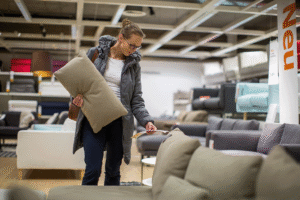
Your friend’s couch is a completely different transaction from a lucky curb find. You’ve seen the room it lived in. That’s real information, and it’s the only thing that makes a used sofa a reasonable risk. Leather and vinyl are safer bets than woven fabric, because there’s simply nowhere for pests to hide.Small Appliances: Plug It In Before You Pay
The rule is not negotiable: it runs in front of you, or you walk. Check the cord, check the plug, and check the door seal on anything that has one. Vacuums get their own warning. A used vacuum from a stranger is a device engineered to collect things from one home and carry them into another. Purchase from a trusted source only and replace the bag and filter before it touches your floor.Flat-Pack Furniture: Usually Not Worth a Second Life
Particleboard holds a screw once. A piece that’s been assembled, disassembled, and hauled across town is structurally spent, and it definitely won’t survive your next move. Buy this category new and cheap, or buy solid wood used instead. There’s no third option that ends well.Rugs: Flat Weave Yes, Shag No
Deep pile can’t be inspected and can’t be fully cleaned. Flat weave and wool can be professionally cleaned for a fraction of replacement cost. But you need to get the quote before you buy and count it as part of the price.How to Check Used Furniture for Bed Bugs: The Five-Minute Inspection
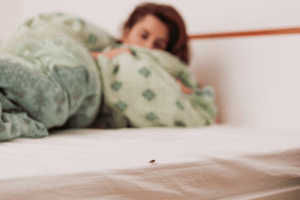 Nobody else in your search results will teach you this. Bring a flashlight. Use your phone’s camera zoom as a magnifier. The world is your oyster. But whatever you do, you need to check for bedbugs.
Where to Look, In Order
- Seams and piping: the classic hiding spot, and the first place to look on anything upholstered.
- Under the cushions, inside the cushions: unzip them to get a better look.
- Screw holes and frame joints: bed bugs like tight, dark gaps in wood.
- The underside of the piece: tip it over. This is where people stop looking, which is why it’s worth looking.
- Drawer runners and the back panel: pull drawers all the way out and check the cavity behind them.
What to Do Before It Comes Through Your Door
Unwrap and inspect outside, or in a garage or hallway. The last place you should inspect an item is in the living room or bedroom. Vacuum the piece thoroughly, then bag the vacuum contents and walk them straight to the dumpster. Wipe down hard surfaces. Anything fabric that can be laundered goes through a hot wash and a hot dryer, which is the one method that reliably kills everything that shouldn’t be there. In a multifamily building, bed bugs don’t stay in your unit. They travel through walls and outlets to your neighbors. Depending on your lease and your state, you can be held financially responsible for treating the whole building: a five-figure problem that arrived inside a $75 armchair.Check the Recall List Before You Load the Truck

Why Any Dresser Made Before September 2023 Deserves a Second Look
On September 1, 2023, a federal stability standard for dressers and other clothing storage units became mandatory under the STURDY Act. It applies to units manufactured after that date. Which means nearly every secondhand dresser on the market right now was never required to meet it. Most used dressers are perfectly fine. All you need to do is anchor the dresser. Tip-overs send an estimated 17,800 people to emergency departments every year, and 44 percent of them are kids, according to CPSC’s 2023 tip-over report. CPSC’s Anchor It campaign walks through the hardware.How to Tell If Used Furniture Is Safe: Look Up the Recall in Under a Minute
- Find the model or lot number. It’s usually on a label inside a drawer or stapled to the back panel.
- Search it in the CPSC recall database.
- No label? Treat it as unknown and anchor it regardless.