Adoption of smart home technologies saw continued growth in 2016, with nearly a quarter of US households now owning some type of smart home device according to Statista. That number is sure to grow in 2017 with broader availability of smart home devices at retail, and the debut of more low-cost and fully featured alternatives.
But which smart home technologies should you watch for in the New Year? There’s a few we’ve seen that have gained steam in recent months, and others that we fully expect to be “the next big thing” in smart homes in 2017. Here’s our favorites.
Zone-Based Smart Thermostats
Smart thermostats have been since the beginning of the so-called “smart home revolution” – Nest’s Learning Thermostat was an early hit. But now that the market’s maturing, thermostat manufacturers are offering a more fine-tuned approach.
Zone-based systems will become more prevalent in 2017. You still have the main thermostat in a central location in the home, but now thermostats in other rooms directly control heating and cooling on a per-area basis. This may lead to even more savings than the traditional single smart thermostat can.
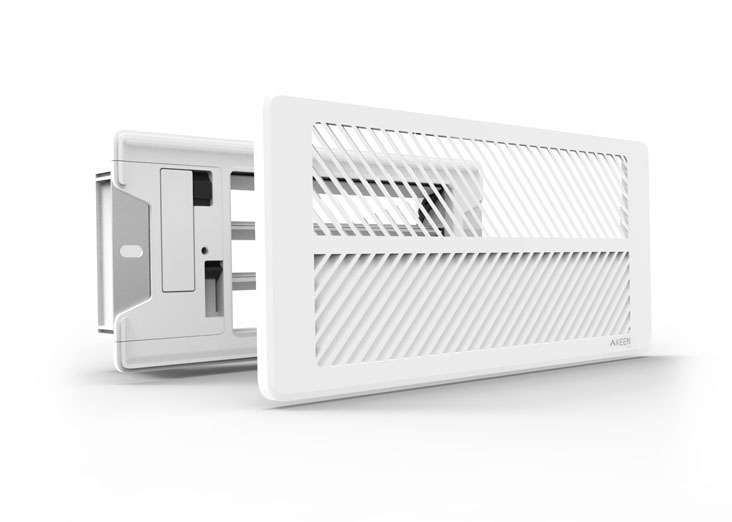
You don’t even need any kind of special HVAC system. New smart vents – like those from Keen and Ecovent – can work with your thermostat to heat rooms only when there’s somebody in the room, or via an app when you’re away from your home or apartment.
Keen’s smart vent integrates with Nest’s Learning Thermostat to offer an easy way to turn your ordinary HVAC system into a zone based one. Source: Keen
Automated Smart Home Locks
Smart locks are another smart home device that has been around a long time. While any person looking to add some smarts to their home should consider a smart lock, it might be worth it to look for newer models, because older one require an app to operate them which isn’t always convenient.
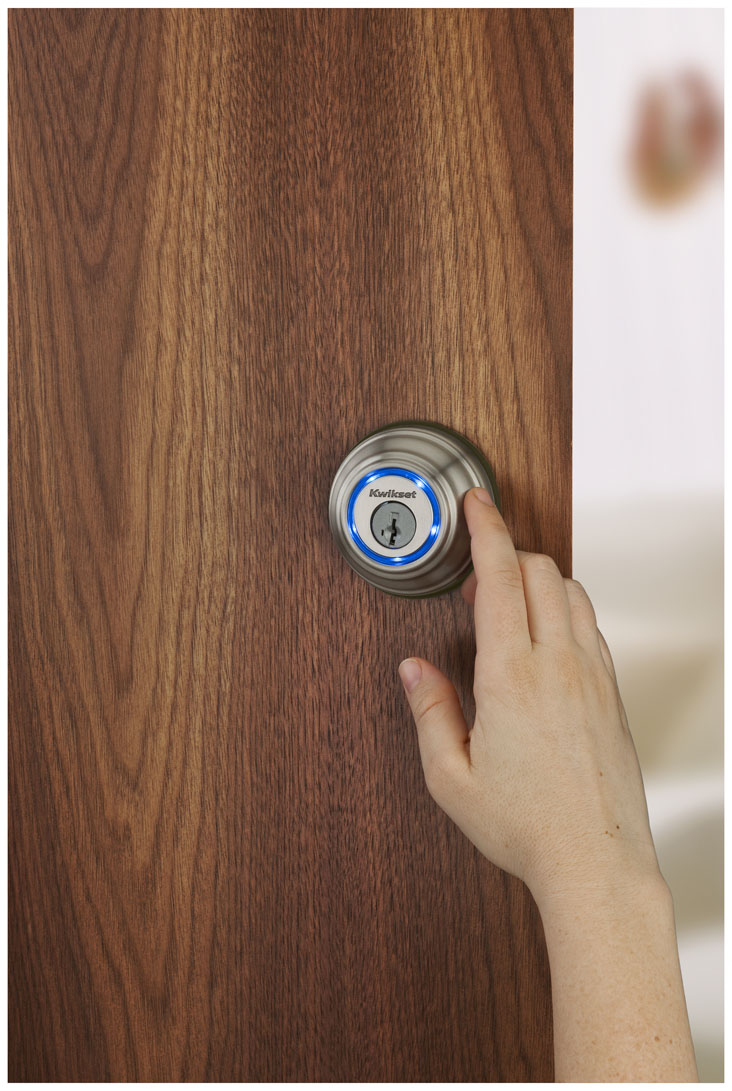
Newer smart locks support some type of automation – that is, it knows when you’re nearby and will unlock and lock your doors for you automatically. That’s helpful if you’re carrying things and don’t have a free hand to fumble around for your phone, or locking your doors for you if it no longer senses you nearby. The added convenience is worth the extra price.
As long as you have your phone in your pocket, a Bluetooth connection with your phone lets Kwikset’s Kevo locks to be unlocked by the touch of your hand. Source: Kwikset
Cross-Device Integration (no ‘Hub’ Required)
Smart home manufacturers initially developed most devices to be compatible with some type home automation platform: Samsung’s SmartThings, Lowe’s Iris, and Wink are examples.
That strategy never seemed to catch on, possibly because the manufacturer itself had little control over the process. While adoption of smart home devices has been robust, many consumers continue to purchase them as standalone products instead of being part of some platform. Thus we expect standalone devices to continue to make up the large majority of smart home products sold in the New Year – but will “play nice” with others.
Ring’s Video Doorbell is a good example of this. While it is compatible with Wink’s hub, the company has its own in-app integrations with a variety of other devices. You can unlock your smart lock within the Ring app with compatible smart locks from Lockitron, Kwikset’s Kevo, or smart locks with your ADT security system, or turn on lights controlled by Wemo switches if the doorbell detects motion and/or the doorbell is rung.
Expect more of this type of integration in 2017.
You don’t need a hub to operate your locks with Ring. Instead, from a menu within the video screen you can access a compatible lock and unlock your door for expected guests even when you’re away. Source: Ring
IFTTT (and Other Automation Services)
IFTTT has been around for a while, but until recently was primarily used by the “early adopter” type. The service tried to change that late in 2016 by reintroducing the service to consumers through tighter integration with its myriad of partners.
Partners are now encouraged to build IFTTT into their apps, which allow consumers to easily activate “applets” to use their smart home devices in ways that just the app itself cannot do, such as saving images from your Bloomsky Weather Cam to your Google Drive or syncing Ooma and Hue to illuminate your pad a certain color when you get an important voicemail. Other services like Stringify, which is similar to IFTTT, also are pushing their partners to give their customers easier access to their automation offerings.
Automation services like IFTTT, Stringify and others will become increasingly prevalent in 2017, which gives smart home consumers another way to integrate their smart home devices and other services like Google Drive, social media accounts, and email and SMS together in ways that make the most sense to them.
IFTTT can now be found inside the apps of many of its partners, allowing quick and easy activation of the most popular applets for that device. Source: App Screenshot
Amazon Alexa, Google Now, maybe Siri?
Siri, Google Now, and Cortana have all gone mainstream on our mobile and desktop devices, but one area where voice control made major inroads during 2016 was in the smart home. Amazon’s Alexa became one of the must-have virtual assistants through the $180 Echo speaker, and the release of the $50 Echo Dot lowered the price of entry to a spot where just about anyone can afford.
In response, Google launched its Echo like Google Home in time for the holiday season, which can perform many of the same functions that Alexa can, and both have made it super-easy for smart home device manufacturers to add support for their products. It is pretty likely that most device makers will add support for one of these virtual assistant platforms at some point in 2017.
We certainly don’t think Apple will sit out for much longer either. Predicting what Apple will do is difficult, but there are rumors that Siri will eventually find its way to an Echo/Google Home-like device in 2017.
Amazon’s puck-like Echo Dot speaker is only $50, and makes voice control of compatible smart devices very easy. Support among popular devices is robust already, and will grow in 2017. Source: Amazon
Environmental Maintenance
Smart home manufacturers have spent quite a bit of time focusing on building products and services aimed at making our lives easier. However recently we’re seeing more and more devices aimed at helping us make the environment around us better.
Refrigerators are now able to actively control the temperature and humidity to maintain freshness longer, as well as provide ways to keep track of the freshness of our foods. Other devices are tracking air quality above and beyond your smoke and carbon monoxide to allow those with allergies or other breathing problems live better, and smart water filters actively monitor and filter water appropriately to ensure potentially harmful chemicals and particulates are removed.
There’s plenty more opportunity for smart home devices to address other environmental concerns, so it’s not out of the question to expect a focus on the living better aspects of the smart home in the New Year.
Note: Always check with your property manager before installing Smart Home Devices in your apartment or rental home.
Look at this little guy! Isn’t he so cute and pathetic? I almost seem cruel for making him wear an outfit like this, huh? Well let me tell you, after reading some tips on how to keep my pet safe in the winter, I’m actually doing a GOOD thing by dressing him up like this!! […]
There is a struggle among apartment renters. The struggle is decorating a small space while keeping the space organized and focused. Small apartments can be a challenge to decorate due to large furniture sizes, restricted room sizes and renters owning more things than they have room for. The following suggestions will revolutionize small spaces, giving […]
If fitness is a priority in your life, you may want to consider looking at apartments with a gym on site. This can be a beneficial feature that adds convenience to your workout routine. It also can be a great way to save the money that you would otherwise be spending on a health club […]
You love your apartment community so why not help keep it safe? There are some things that all of us can do to help make where we live just a little safer! For example, you could start a neighborhood watch program, or if your apartment community already has one, become more involved. Any motivated individual […]